In Charles Dickens' Great Expectations, there are some cases where Pip struggles to distinguish between virtue ad vice in those he meets. These cases generally arise from Pip's inability to distinguish between virtue and vice in himself, which I believe comes about because of the way he is suddenly thrust into the life of a London gentleman before he has a chance to know himself. I think that Pip's views of the virtues and vices of the people he meets in London and the people he knew in Kent are usually accurate, and it's only when one of the people from Kent tries to cross into Pip's life in London that he begins to struggle with virtues and vices. The most important of these characters are Joe, Magwitch and Pip himself.
When Pip was a little boy living in Kent with his sister and Joe, he saw Joe as someone to look up to. Joe was always kind to Pip, and they looked after each other when Pip's sister went on one of her Rampages. Pip knew that when he grew up he would be Joe's apprentice, and that would be a good life for him. It is likely that he would have been content with that life, as he says himself, if only he had never gone to see Miss Havisham. But Pip does go to Miss Havisham's, where he meets Estella and falls in love with her. She says things about Pip's appearance and manner that make him wish he'd been brought up more like a gentleman. After that day, Pip can't think of Joe without also thinking of how uncouth and unmannerly he is. Later in the story when Joe comes to visit Pip in London, all Pip can see is how Joe doesn't fit into Pip's new life and how embarrassing it is for Pip to have him there. Pip can no longer see the virtues that still infuse Joe's being.
The second character, Magwitch, Pip originally associates with vice. Pip meets him as a nameless convict, a dangerous man who will stop at nothing to get what he wants. He scares Pip so badly at that first meeting that Pip agrees to steal food for him. Pip forever after remembers that act with shame, which I think contributes to his negative opinion of Magwitch when the two meet again. Even though Magwitch's actions in the meantime have been virtuous and almost entirely for Pip's sake and the man is still trying to give Pip his fortune, Pip continues to see Magwitch as a danger, an embarrassment and a source of trouble.
As I said before, Pip also struggles to distinguish between his own virtues or values and vices. While spending his childhood in Kent, Pip is usually virtuous, because his values are the things he's learned from Joe: hard work, kindness, love, perseverance and duty. Once Pip meets Estella, he begins to value things such as status and image. Although Pip still tries to be virtuous, he's no longer happy, and his vice becomes wishing for something he knows he cannot have. When suddenly his dreams come true and he's whisked off to London, Pip has to change once again to fit into his new society. For the most part, the values are similar: status and image. However, without Joe's influence and Joe to please, Pip succumbs more easily to the vices of this new society, and "acquires expensive habits" as well as becoming very sensitive of how his peers see him. This last vice leads to his rejections of Joe and Magwitch when they appear again in his life. I think that in the end, Pip is redeemed when he finally returns to his virtues: first duty, then love. It's duty that makes him agree to help Magwitch escape, but love that makes him stay with the man so he can die in peace. It's a duty to apologize that drives him back to Kent to see Joe and Biddy, but their love that allows him to forgive himself and go on in his life.
Sunday, 9 June 2013

Friday, 7 June 2013
To Kill A Mockingbird by Harper Lee
Several of the characters in To Kill A Mockingbird embody the idea that "When a character acts selflessly against the prevailing vices of the the dominant social order, true virtue exhibits itself."
The first of these characters is Tom Robinson. He acts against the dominant social order when he begins doing small odd jobs for Mayella Ewell and refusing to take payment. In the culture of the novel, there's a lot of tension between black and white people, and black are regarded as a lower working class. Because of that, they are NEVER expected to do something for nothing. Tom says, "I was glad to do it, Mr. Ewell didn't seem to help her none, and neither did the chillun, and I knowed she didn't have no nickles to spare." He tries to help her simply out of the goodness of his heart, even though Negros aren't supposed to feel sorry for white girls. Unfortunately for Tom, when things go sour and he ends up in court for a crime he didn't commit, no one listens to his side of the story because he's a Negro.
A second character who embodies the quotation is Boo Radley. Boo's 'vice' is not so much a vice as simply the expectations of his family and the people in his neighbourhood. He's been forbidden by his father to ever step out of the house, but on the night of Scout's Halloween pageant he has to in order to save the children who have become in a strange way his friends. Whether he is the one who kills Bob Ewell that night or not is left to the imagination of the reader. Either way, Boo gets away with acting against that 'vice' because he acts for such a selfless reason. Mr. Heck Tate defines it as,"I never heard tell that it's against the law for a citizen to do his utmost to prevent a crime from being committed, which is exactly what he did." He then goes on to say that he won't tell the rest of Maycomb about Boo's virtue because he doesn't want to drag the shy man into the limelight. Unlike Tom Robinson, Boo's circumstances enable him to be very successful in his selfless actions. Scout sums it up perfectly when she says, "Well, it'd be sort of like shootin' a mockingbird, wouldn't it?"
The third character, the one who embodies the quotation the most, is Atticus Finch. Atticus chooses act against the vice of always thinking of himself. Instead he constantly displays virtue by acting for the good of someone else and taking the consequences upon himself. He tries his best to defend Tom Robinson when he could have just let the case go without doing anything to help. More than that, he puts himself in danger to protect Tom at the jail the night before the trial. He allows Bob Ewell to spit in his face and threaten him because he thinks it's better for him to put up with it than for Ewell to take it out on his children. In the second last scene he tries to take the blame and responsibility for Ewell's death onto himself and Jem, and insists he doesn't want it hushed up because he doesn't want Jem to live with a shadow over him. Mr. Tate won't let him, instead insisting that Ewell fell on his own knife, but the fact that Atticus tried to protect Boo Radley is another sign of his virtue. As Mr. Raymond says, he's "not a run-of-the-mill man."
Sunday, 28 April 2013
The Pearl by John Steinbeck
So the artist probes the central mystery of life as he sees it, the paradox of how evil comes out of good, the tear at the heart of laughter, the dream doomed to disappointment in the moment of dreaming, despair conjoined with hope, with which humanity, if it is wise, must learn to live. (Page 129, The Pearl by John Steinbeck.)
The characters in John Steinbeck's novel The Pearl (Kino and Juana) quite clearly live through this paradox when Kino finds his amazing pearl in the local oyster bed. The pearl, which at first offers a chance at wealth and a way out of the poverty in which the family lives, actually becomes the root of all the misery the characters suffer through. Kino begins dreaming of all the things he will be able to buy after he sells the pearl, but once he has said them aloud he becomes stubbornly determined to make them happen. I think the turning point where the pearl becomes truly evil is when Kino steps out of his hut, is attacked by someone trying to steal the pearl and ends up killing the man. Something terribly wrong has come out of what appeared to be good, and things only get worse from there.
Based on a rereading of pages 120 - 122, I think the couple have learned that they must live with this paradox, if not exactly how. I think Juana had always had a deeper understanding of it than Kino, but now she knows just how important that is. Kino, I think, has learned that if he's going to live with it at all, he needs Juana to help him. They have to stand together.
Finally, I think there are a few connections to be drawn between The Pearl and the novel study topic. You can look at it from Kino's point of view: he wants to sell the pearl to get enough money to give his family a better standard of living, and is willing to do whatever it takes to ensure that that happens. But I think the stronger argument is from Juana's point of view. She knows the pearl has become evil and that it will only bring sorrow to Kino, yet she agrees to go with him to sell it in the capital. Several times Kino begs her to take the baby and hide someplace safer, but each time Juana refuses because she knows there is a chance she can help Kino and a certainty that he will need her support. Even though in the end Juana loses her child, she stays by her husband and forgives him. I think she can act so selflessly because she understands the paradox mentioned above: evil will come out of good. The only way for her to live with that is to accept it and love her family regardless, so that her small bit of virtue can counteract the evil in the rest of the world.

Tuesday, 23 April 2013
Anthem by Ayn Rand
"Man—every man—is an end in himself, not the means to the ends of others. He must exist for his own sake, neither sacrificing himself to others nor sacrificing others to himself. The pursuit of his own rational self-interest and of his own happiness is the highest moral purpose of his life."
This ideal from Ayn Rand is realized in her novel Anthem through the story of Equality 7-2521. The character breaks out of the collective society in which the story is set and begins pursuing his own happiness through his work. For a while, the work becomes his highest purpose in life. He stops sacrificing his life and mind for others, but neither do his actions cause trouble for anyone else. He knows he's breaking the rules, but he does it anyway because it makes him happy. The character realizes for himself that he should not be a means to the ends of others, and that enables him to start living the life he longs for.
Secondly, if selflessly is changed to selfishly in the idea that when a character acts selfishly against the prevailing vices of the dominant social order, true virtue exhibits itself, this can still make sense in a way. It is said that the dominant characteristic of a hero is self-sacrifice. But Rand describes sacrifice as:
A sacrifice is the surrender of a value. Full sacrifice is full surrender of all values. If you wish to achieve full virtue, you must seek no gratitude in return for your sacrifice, no praise, no love, no admiration, no self-esteem, not even the pride of being virtuous; the faintest trace of any gain dilutes your virtue. If you pursue a course of action that does not taint your life by any joy, that brings you no value in matter, no value in spirit, no gain, no profit, no reward—if you achieve this state of total zero, you have achieved the ideal of moral perfection.
She also defines it as:
If a man dies fighting for his own freedom, it is not a sacrifice: he is not willing to live as a slave; but it is a sacrifice to the kind of man who’s willing.
By looking at sacrifice this way, it can be argued that a hero does not make a sacrifice because he does whatever it is he does because he believes it's right or because he does it for the people he loves or because of some other value he cherishes. No matter how virtuous he may appear to others, he has selfish reasons for his actions. But usually the fallout from those actions has good effects, so in the eyes of others the hero has exhibited true virtue.
This can also be seen in the story of Equality 7-2521. He acts selfishly early in the novel when his begins sneaking away to work in the subway tunnel, but what comes of that is his rediscovery of electricity. He immediately decides to show his discovery to the world. Not only will it be useful, but he thinks it will be enough to make the Council overlook his faults. He also believes he will become famous and be allowed to live the life he dreams of. Two out of three of these reasons are selfish, but because an observer would not be able to share Equality 7-2521's thoughts, his actions would appear as virtuous. Later, at the end of the story, Prometheus (as he now calls himself) says he will go back to the City and rescue his friends. This is also both virtuous ( he wants to save his friends from 'suffering under the yoke of their brothers') and selfish (he wants to save them because they're his friends and he loves them). So in this way the connection between selflessness and virtue can be twisted into a connection between selfishness and virtue and still, in a way, make sense.
To read more about Ayn Rand and her philosophy of objectivism, visit the Ayn Rand lexicon at aynrandlexicon.com or go right to the page about sacrifice at http://aynrandlexicon.com/lexicon/sacrifice.html.
Monday, 26 December 2011
The Last Seven Stages of the Journey
The Magician's Nephew
C. S. Lewis
Digory Kirke's tests start as soon as he crosses the threshold. He and Polly find themselves in the dying world of Charn, where Digory makes the mistake of waking Jadis, the last Queen. She returns to London with the two children, where she proceeds to cause all kinds of chaos. Enemies are found in Jadis and Digory's Uncle Andrew, while allies are a cabman, his horse, and Polly.
Digory manages to get everyone out of London and into the new world of Narnia. Here his mentor shows up -- a bit late, but just when he's needed. Aslan sends Digory, Polly, and Fledge (the cab-horse-turned-pegasus) on a journey to a garden high in the mountains to help repair the damage Digory has done by bringing Jadis and her evil into the newborn world of Narnia. Though Digory doesn't know it, that journey is his Approach to the Inmost Cave.
When they reach the garden, Digory enters alone. This is his Ordeal. Aslan told him to pick one apple for Narnia, and an inscription on the garden gates warns only to take of its fruit for others. As long as Digory obeys, he will be fine. But he knows that the fruit could heal his dying mother back in England, and he struggles with the temptation to pick a second apple. At last he decides against it, and turns to take his Reward back to Narnia.
As he's leaving, Jadis finds him. She has eaten an apple, and tries to tempt Digory to do the same. When that doesn't work, she tries to convince him to take one for his mother. He almost does before he's able to see through her lies to what she really wants. He survives the Resurrection.
Digory, Polly, and Fledge make their way along the Road Back. At last they return to Narnia and Aslan uses the apple to protect the land against Jadis for hundreds of years to come. Just as the children are leaving he lets Digory take an apple with him to help his mother. Digory returns to London with this Elixir and brings his mother back from the brink of death.
All in all, a pretty successful journey.
Sunday, 18 December 2011
The First Five Stages of the Journey
High Rhulain
Brian Jacques
This is one of my favourite books of all time. The main character's name is Tiria Wildlough, and her call to adventure comes in a dream. Martin the Warrior (the spirit who watches over Redwall abbey) comes to her and introduces her to the warrior queen with him. She tells Tiria:
"Like the sun, High Rhulain will rise anew,
to set the downtrodden free.
A warriormaid with Wildlough blood
must cross the Western Sea.
She who looks ever through windows
at the signs which feathers make,
seek the Green Isle through her knowledge,
for all thy kinbeasts' sake." (Brian Jacques, High Rhulain 45)
Obviosly, this is somewhat of a riddle. Tiria doesn't refuse her call to adventure, but she is delayed. It takes her and her friends a while to solve the riddle so she can find out where Green Isle is. One of the people who is most helpful is "she who looks ever through windows at the signs which feathers make," or Sister Snowdrop, one of the historians at Redwall Abbey. Snowdrop gives Tiria most of the knowledge she needs. You could say she was one of her mentors.
But other people help Tiria on her journey too. Her father, Banjon, is very supportive of her quest and has been training her all her life. Log a Log Urfa and his tribe of Guosim help Tiria get a boat to sail across the Western Sea, and Cap'n Cuthbert Frunk W. Bloodpaw, Terror of the High Seas, actually sails her to Green isle. Once she gets there, Leatho Shellhound helps her lead her resistance and keep her head as she suddenly becomes High Queen Rhulain of Green isle. See what I mean? A lot of people are mentors to Tiria.
As for crossing the threshold, I'd say that comes when Tiria finally embarks on her voyage across the Western Sea. During her journey through Mossflower Wood her father is with her all the way, but for her to truly enter the special world she must leave him and all her other friends behind.
Another Quote About Reading
"But for a moment... for a brief... moment.... I didn't know. And the wind carried me up and took me along for a ride. And I forgot. I forgot my own story... and I flew... flew on the wings of someone else's." (Morris Paynch, 7 Stories 100)
This quote was one I heard in the production of 7 Stories this fall. The character is talking more about his life, and how if you just believe in yourself you can do anything, but I thought it could also apply to reading. If an author has written a book really well you can forget yourself and just get lost in the story. Then when you try to come back to the real world you feel kind of dazed and out of focus, because you've become so wrapped up in someone else's story that you've forgotten how to be a part of your own. Sometimes it takes a while to get back.
This quote was one I heard in the production of 7 Stories this fall. The character is talking more about his life, and how if you just believe in yourself you can do anything, but I thought it could also apply to reading. If an author has written a book really well you can forget yourself and just get lost in the story. Then when you try to come back to the real world you feel kind of dazed and out of focus, because you've become so wrapped up in someone else's story that you've forgotten how to be a part of your own. Sometimes it takes a while to get back.
Saturday, 3 December 2011
The Ordinary World
Dewey
Vicki Myron
This book is a true story, told from the perspective of the author. It's almost an autobiography, but it's not just about Vicki. It's a biography of the entire town of Spencer. Vicki walks you through her childhood, her marriage, and her adult life, but also through the farm crisis of the 1980's, the fire on Grand Avenue in 1931, and the entire history of the Spencer Public Library. The events are a bit scrambled, and out of order, but by the end you feel as if you've know the people all your life.
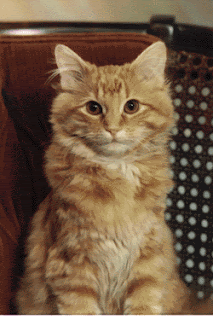
The protagonist is called Vicki. She's the director of the Spencer Public Library, and her ordinary world is, I think, a world without a cat in it. She's a single mother who grew up on a farm, had a failed marriage, a late education, and a terrible medical history. She and her teenage daughter are pushing each other further and further away, and Vicki is trying to run a library and take a master's course in library science all at the same time. And then on the morning of January 18, 1988, after one of the coldest nights of the year, Vicki arrived at work to find a kitten in the library drop box.
The staff named him Dewey. He became the library cat, and he was perfect for the job. He loved people. He loved being in the library. He could cheer up anyone, on any day, at any time, no matter what. He helped Vicki and her daughter stop fighting, if only for a while. He always knew when someone needed comfort. The ordinary world is defined as being a place where the protagonist feels safe, but in this case I think it's the opposite. Dewey made Vicki's life an altogether better thing.
I realize that this is more of a summary than a description of the ordinary world, but I had to talk about this cat. This isn't another sucky fairy story about the cat who saved Christmas -- this is real. Dewey influenced so many people that a flim crew came from Japan to film him. Japan! This is an amazing book about an amazing town and a totally amazing cat. I think it's a book that everyone should read.
Here's the link to the Spencer Public Library's site: http://www.spencerlibrary.com/dewey.shtml
"I have never been a morning person, especially on a cold and cloudy January day, but I have always been dedicated. There were a few cars on the road at seven thirty, when I drove the ten blocks to work, but as usual mine was the first car in the parking lot. Across the street, the Spencer Public Lbrary was dead -- no lights, no movement, no sound until I flipped a switch and brought it to life. The heater switched on automatically during the night, but the library was still a freezer first thing in the morning. Whose idea was it to build a concrete and glass buliding in northern Iowa? I needed my coffee." (Vicki Myron, Dewey 8)
This quote shows the boring sameness of Vicki's ordinary world, and how she almost can't bear to get up and go to work each morning because it's just too much to do. Later she says, "'Good morning, Dewey,' I would say, my heart singing and the library bursting with life, even on the darkest and coldest mornings." (Vicki Myron, Dewey 193) Her special world may not appear to be much different from her ordinary one, but you'd be surprised at how much difference one cat can make.
<--- Spencer Public Library. Spencer Public Library. Spencer Public Library. Web. Dec. 3, 2011.
Vicki Myron
This book is a true story, told from the perspective of the author. It's almost an autobiography, but it's not just about Vicki. It's a biography of the entire town of Spencer. Vicki walks you through her childhood, her marriage, and her adult life, but also through the farm crisis of the 1980's, the fire on Grand Avenue in 1931, and the entire history of the Spencer Public Library. The events are a bit scrambled, and out of order, but by the end you feel as if you've know the people all your life.
The protagonist is called Vicki. She's the director of the Spencer Public Library, and her ordinary world is, I think, a world without a cat in it. She's a single mother who grew up on a farm, had a failed marriage, a late education, and a terrible medical history. She and her teenage daughter are pushing each other further and further away, and Vicki is trying to run a library and take a master's course in library science all at the same time. And then on the morning of January 18, 1988, after one of the coldest nights of the year, Vicki arrived at work to find a kitten in the library drop box.
The staff named him Dewey. He became the library cat, and he was perfect for the job. He loved people. He loved being in the library. He could cheer up anyone, on any day, at any time, no matter what. He helped Vicki and her daughter stop fighting, if only for a while. He always knew when someone needed comfort. The ordinary world is defined as being a place where the protagonist feels safe, but in this case I think it's the opposite. Dewey made Vicki's life an altogether better thing.
I realize that this is more of a summary than a description of the ordinary world, but I had to talk about this cat. This isn't another sucky fairy story about the cat who saved Christmas -- this is real. Dewey influenced so many people that a flim crew came from Japan to film him. Japan! This is an amazing book about an amazing town and a totally amazing cat. I think it's a book that everyone should read.
Here's the link to the Spencer Public Library's site: http://www.spencerlibrary.com/dewey.shtml
"I have never been a morning person, especially on a cold and cloudy January day, but I have always been dedicated. There were a few cars on the road at seven thirty, when I drove the ten blocks to work, but as usual mine was the first car in the parking lot. Across the street, the Spencer Public Lbrary was dead -- no lights, no movement, no sound until I flipped a switch and brought it to life. The heater switched on automatically during the night, but the library was still a freezer first thing in the morning. Whose idea was it to build a concrete and glass buliding in northern Iowa? I needed my coffee." (Vicki Myron, Dewey 8)

This quote shows the boring sameness of Vicki's ordinary world, and how she almost can't bear to get up and go to work each morning because it's just too much to do. Later she says, "'Good morning, Dewey,' I would say, my heart singing and the library bursting with life, even on the darkest and coldest mornings." (Vicki Myron, Dewey 193) Her special world may not appear to be much different from her ordinary one, but you'd be surprised at how much difference one cat can make.
<--- Spencer Public Library. Spencer Public Library. Spencer Public Library. Web. Dec. 3, 2011.
Asking Questions
Eon Dragoneye Reborn
Alison Goodman
Is Eona a hero? Or has she just made a mistake that gets her into more and more trouble?
I think that the main character in my book, Eona (or Eon, since she's disguised as a boy), is a real hero. She and her master made a desperate gamble -- entering her in the competition to become a Dragoneye, even though girls aren't allowed. But instead of being picked by the Rat Dragon, Eona is chosen by the lost Mirror Dragon, who hasn't been seen for five hundred years. With no older Dragoneye to guide her, Eona has no way to contact her dragon. Many times she is tempted to give up, or confess that she's a girl, or run away. But every time, she's kept back by the knowledge that it's not just herself who's in danger. The future of the empire pretty much rests on her shoulders, because she is "the only thing standing between a council in the control of Ido and one that still served the emperor and the land." (Alison Goodman, Eon Dragoneye Reborn 310) Even though she's scared out of her wits and constantly feels like a failure, she stays put for the sake of everyone who's depending on her.


"Dictionary Series -- Self-Sacrifice" Can Stock Photo canstockphoto.com, Nov. 1 2011. Web. Dec. 3 2011.
Okay, so this one's kind of obvious, but Eona does make a huge self-sacrifice, all through this book and the next one. Almost everything she does she does to keep her secret, so that people like her maid won't get into trouble.
Alison Goodman
Is Eona a hero? Or has she just made a mistake that gets her into more and more trouble?
I think that the main character in my book, Eona (or Eon, since she's disguised as a boy), is a real hero. She and her master made a desperate gamble -- entering her in the competition to become a Dragoneye, even though girls aren't allowed. But instead of being picked by the Rat Dragon, Eona is chosen by the lost Mirror Dragon, who hasn't been seen for five hundred years. With no older Dragoneye to guide her, Eona has no way to contact her dragon. Many times she is tempted to give up, or confess that she's a girl, or run away. But every time, she's kept back by the knowledge that it's not just herself who's in danger. The future of the empire pretty much rests on her shoulders, because she is "the only thing standing between a council in the control of Ido and one that still served the emperor and the land." (Alison Goodman, Eon Dragoneye Reborn 310) Even though she's scared out of her wits and constantly feels like a failure, she stays put for the sake of everyone who's depending on her.

"Kindness". mbao002 (Username, I suppose, of the person who created the image). Clker.com. Rolera LLC, Aug. 29. 2011. Web. Nov. 30. 2011.
I chose this image because if you look at it not as having the world in your hands, but as having the world in your hands and having to be very, very careful not to drop it, it's a pretty good representation of Eona's situation. Plus, with all that dragon power at her beck and call, Eona really does have the world at her fingertips -- she constantly struggles against the desire for more power.

Tuesday, 8 November 2011
Character Archetypes
The Hunger Games Trilogy
Suzanne Collins
One character who represents a character archetype in this story is President Snow. He's the shadow. He lurks behind every single problem Katniss is confronted with. In a way, he's untouchable. If you were to try and expose his crimes to the public, you'd be dead within an hour. Every time you try to catch him he flits out of your grasp.
"His quarters. I have tresspassed into his home, the way he slithered into mine last year, hissing threats with his bloody, rosy breath. This greenhouse is one of his rooms, perhaps his favourite; perhaps in better times he tended the plants himself. But now it's part of his prison. That's why the guards halted me. And that's why Paylor let me in." (Suzanne Collins, Mockingjay 355)
Sunday, 6 November 2011
Classics
The Complete Sherlock Holmes Volume 2
Sir Arthur Conan Doyle
What is a classic? I think a classic is a story that can remain popular through time because it can still relate to us even four hundred years after it was written. Like Shakespeare.
The book I'm currently reading is a classic. It was written in the 1800's, but people still read it today, and I think it's still going to be popular 200 years from now. The stories are timeless because the idea of a detective who can solve anything is so appealing. I mean, what TV show hasn't done a spoof on Sherlock Holmes? Even his personality is appealing, because he's kind of a misfit, even though he's so brilliant, and he needs some one to kind of keep an eye on him so he doesn't drive himself crazy. The language is different, though, and that makes it a bit hard to read for people in our generation. But other than that, there's no reason to think that it won't go on being popular for a long time.
Friday, 21 October 2011
Making Connections
Pegasus
Robin McKinley
'A part of that discomfort was her relentless sense of herself as wrong, as alien -- stiff and clumsy, a grotesque unnatural shape and freakishly unbalanced posture (how ridiculous to spend all your life rearing!). And bald. And wingless....She felt her arms -- her forelegs -- flapping foolishly at her sides; how bizarre human shoulders were, pulling the forelegs apart and forcing them to dangle.' (McKinley, Pegasus 266)
 In this book, there is an Alliance between humans and pegasi, an Alliance that is strengthed by the binding of each king's children to the children of the other. Sylvi and Ebon have a better binding than most -- they can actually talk to each other. For her sixteenth birthday, Ebon decides to take Sylvi to his homeland of Rhiandomeer, where she is the only human in a land of pegasi. In all the time Sylvi spends in the pegasus lands, she is constantly reminded of how ungraceful humans are. She's different, and you get that same feeling whenever you go somewhere where you are obviously a foreigner -- even just to Quebec. When everyone around you is speaking French (which always seems to sound so much smoother than English) and you're speaking English, you feel like you stick out like a sore thumb. That's one thing reading this book reminds me of.
(Picture from http://lamiastellina.altervista.org/pegasus/pegasus.html)
Robin McKinley
'A part of that discomfort was her relentless sense of herself as wrong, as alien -- stiff and clumsy, a grotesque unnatural shape and freakishly unbalanced posture (how ridiculous to spend all your life rearing!). And bald. And wingless....She felt her arms -- her forelegs -- flapping foolishly at her sides; how bizarre human shoulders were, pulling the forelegs apart and forcing them to dangle.' (McKinley, Pegasus 266)

(Picture from http://lamiastellina.altervista.org/pegasus/pegasus.html)
Monday, 17 October 2011
Character Sketch
City of Secrets
Mary Hoffman
'"I'm dyslexic," he said. "Not just a mild case - severly dyslexic. I have to have computers and special programs just to do my schoolwork. And I have this really clever - and beautiful - girlfriend who's going to go to university and be a top lawer. And . . . I'm terrified of losing her," he finished simply.' (Mary Hoffman City of Secrets page 67)
Matt is dyslexic. He's seventeen, and hates that he has such a hard time with words. He's dating a girl called Ayesha, and he's worried she might dump him. She's a genius - and she used to date someone really smart, so Matt thinks she might not want to be stuck going out with a guy who just plays rugby. He underestimates himeself.
I think that as the plot goes on, Matt's going to realize that he really is special in a way - he's not just a jock. Maybe there's a reason Ayesha likes him. As well, I think he might decide to try harder to work around his dyslexia, instead of just giving up on reading.
http://www.youtube.com/watch?v=7epRPz0LGPE
I picked this song because it's kind of about being suddenly able to let go of your problems and fly away from everything, and that's exactly what Matt is able to do once he comes to terms with his dyslexia and realizes it's not as big a deal as he thought. I picked this video specifically because I really like the style of it.
Saturday, 15 October 2011
Summary of City of Bones

In City of Bones (by Cassandra Clare) (picture from http://www.amazon.ca/City-Bones-Cassandra-Clare/dp/1416914285) fifteen-year-old Clary Fray goes home one night to discover that her apartment has been ransacked and her mother has disappeared. To top it all off, she's attacked by a demon and then rescued by Jace Wayland, a boy she met hours ago. Before she knows it, Clary is whirled in world of Shadowhunters, demons, vampires, werewolves, and secrets where she is fighting not only for her own life, but for the lives of everyone she loves.
This book is impossible to put down. You're on the edge of your seat the whole way. The only problem is that Clary seems to be digging herself into a deeper and deeper hole by keeping secrets and generally annoying her closest frinds, but I guess that makes you all the more eager to find out how it ends. It's really well written - the author reveals secrets at just the right time to keep you reading. And just the right amount of romance makes the book both exciting and frustrating at the same time. You're left desperately waiting for more by the end.
Friday, 16 September 2011
A Quote About Reading
I always liked the quote "Some books should be tasted, some devoured, but only a few should be chewed and digested thoroughly." I read it in Inkheart ages ago, and I'm amazed I still remember it. I only read the book once, but I raced through it so fast that it was like I only tasted it. Most books I 'devour', but that's not the same as reading them. I do read fast - I can't really help it. But the books I really love are the ones I can go back to over and over again, and look at it a different way every time. Those are the ones that really stick with you.
Subscribe to:
Posts (Atom)